Tuesday, March 22, 2011

Monologue: The Last Unicorn by Peter S. Beagle

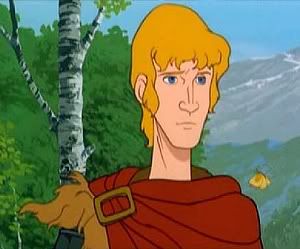
After watching the movie with my girlfriend, she gave me her copy of The Last Unicorn by Peter S. Beagle and showed me a monologue by Prince Lir delivered toward the end of the story. Even though the monologue is not featured in full in the movie, I was drawn to it because of Jeff Bridge's delivery of an excerpt from it: "The happy ending cannot come in the middle of the story."

This is the first monologue I've ever taken from a book. It's not an uncommon practice, and I'm actually pretty sure most people think it's cool, because it's kind of do-it-yourself. And as long you're transcribing it, it's a good idea to tailor your monologue to your liking, making cuts or substitutions you need. You're the one auditioning, after all.


There is a lot of subtext here. Prince Lir has changed a lot for the sake of the unicorn, and there's a real sense of history behind each line. But it is dangerous to get caught up in the subtext of any piece as it relates to its source material. Decisions you make in regards to the original story mean little to whoever you audition for. Everyone needs to find a reason to perform the monologue that they choose, but intentions can get muddled without the proper context. You can't want something on behalf of your character because you think it's what they need. You must want it because you need it.

It all comes down to the text, always. It's what you use, and in the end it's what they hear. Is Lir a true hero? Is he proud to be a hero? Or is he pretending? Is he better than a hero? What was it all for?

My lady, I am a hero. It is a trade, no more, like weaving or brewing, and like them it has its own tricks and knacks and small arts. There are ways of perceiving witches, and of knowing poison streams; there are weak spots that all dragons have, and certain riddles that hooded strangers tend to set you.

But the true secret of being a hero lies in knowing the order of things. The swineherd cannot already be wed to the princess when he embarks on his adventures, nor can the boy knock at the witch’s door when she is away on vacation. The wicked uncle cannot be found out and foiled before he does something wicked.

Things must happen when it is time for them to happen. Quests may not simply be abandoned; prophecies may not be left to rot like unpicked fruit; unicorns may go unrescued for a long time, but not forever. The happy ending cannot come in the middle of the story.

Heroes know about order, about happy endings – heroes know that some things are better than others.

You were the one who taught me. I never looked at you without seeing the sweetness of the way the world goes together, or without sorrow for its spoiling. I became a hero to serve you, and all that is like you. Also to find some way of starting a conversation.

Wednesday, March 9, 2011

#3. Boston Casting for Kevin James

I got a call from a casting company for the first time. They needed a high school student for the Kevin James movie Here Comes the Boom. So they called me, the hairiest man there is, presumably because I auditioned for a high school student the last time they saw me.

In order to get ready I had to shave. I don't like shaving. If you look at my headshot, you can see that I'm not shaven. I maintain a consistent layer of stubble to keep me from looking so goulishly pale, and because I think it's cool. For me to have a shaven face is like an affront to nature. When you audition you are basically conveying all of your best qualities in a short period of time. For me to audition with a shaven face is like someone announcing their candidacy for President while opening fire into the crowd they are speaking to.

But I went ahead and did it until my skin was raw, moisturized that, and trimmed the chest hair near my collar bone so it wouldn't peek up through my collar. I was late, and chatted with Grant as I signed in. (Time Called, 10:30. Time Arrived, 10:35) The next batch of dudes were called in, but I hadn't filled out the info form yet. Grant tossed some sides at me and told me to just fill it out inside.

I was surprised at the collection of dudes I was included with. We were all pretty different in appearance, varying builds, varying levels of attractiveness, though I was still the palest. Only once we started slating for the camera did I actually look at the sides together with the guy next to me.

1) Kevin James, a teacher, furiously shakes a vending machine and is rewarded with various snacks. He finds that a weird kid has been watching him the whole time, and tosses him a bag of cookies for his silence.

2) Kevin James stumbles onto school property through the sticks, where he is greeted happily by delinquents who presumably just finished a phat jay.

When each person handed their info and headshot to the Woman in Charge she asked if they had a background in comedy, which I had always believed to be a subjective quality, and nobody said No. She later revised her query to include improvisation.

Some guys were very funny, even if they were just pulling off mild reactions. Some guy went "too far" at some point and she reminded us that this isn't theatre. I was a little worried. I happen to think I have great reactions, but I know that my facial features are really huge... I didn't want to go "too far" by accident.

When my turn came up, the Woman in Charge shook an invisible vending machine, moaning, "No, not today!" The she tossed me a bag of nondescript sandwich cookies, "You didn't see anything, are we clear?"

A girl had come in during the start of my audition and waited until the end of the take to ask WiC a question. I feel more pissed about it now then I did then.

Once she was gone, we did it once more. She didn't ask me about comedy or improvisation, and she didn't have me test for the delinquent.

I'd make a much better weird kid, anyway.


7 headshots remain.

Tuesday, March 8, 2011

#2.5 The Freedom Trail

When I left for Boston to study acting, my friends from home thought that I would end up in Shear Madness or working for The Freedom Trail. Or, wait, I guess they thought that it would be funny if I ended up working at Shear Madness or The Freedom Trail. I don't remember if they actually believed that I would.


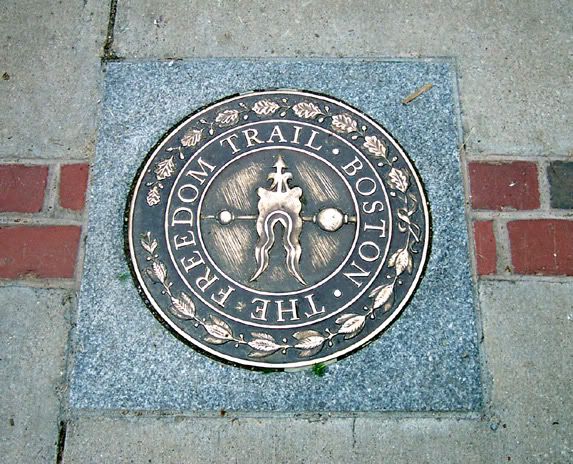
So The Freedom Trail is a long red line that passes by and through a large amount of historical sites in Boston, or sites that represent famous things that happened in Boston's history, specifically from Revolutionary-era. Tours follow this line so that they may learn the most about each site from a tour guide who is dressed either as a famous American colonist or patriot, or a wife of a patriot.

Tour guides, somewhat like clowns, are often seen by non-actors as bogus or unwanted positions. In reality it's a rather palpable way to transfer the skills they've acquired in their training, and I've only heard of satisfying experiences from those that do it.

I heard from Chelsea that they were hiring for the new season - "season" being a business term meaning "some time to some other time". I contacted the Trail's creative director, an Emerson graduate like everyone else in the world, and he told me all about their deal. Very free-form scheduling that works for all of the guides, especially those who may also be in shows by night, but he also told me about the crazy busy time they have in spring because of all the field trips that school kids go on, when everyone would be required to work. It was exciting stuff.

Then he told me how auditioning would work: I would choose one particular site on the Freedom Trail (not the Boston Common, everybody does that), do some research and then essentially write a sample tour of that location. It would include, of course, historical facts about the location itself, but it was especially important to include a story of something that happened there.

During my stint at Opera Boston I read through a pair of the Freedom Trail's guide books very closely, waiting for one of them to really excite me. The really great ones, I think, are towards the end of the trail, the ones that have juicy war stories attached to them.

In both books I kept coming back to Old North Church, the site at which the signal lanterns were placed to warn which direction the British army was to set on Lexington - one if by land and two if by sea. I was very familiar with the tale because of Henry Wadsworth Longfellow's poem "Paul Revere's Ride", which I was familiar with because of that episode of Animaniacs.

The guide books were a huge part of my research, which seemed oddly... cannibalistic, considered they were published by the company I was hoping to work for. They revealed that the guy who most likely hung the lanterns at the top of the church steeple was apparently a sexton who lived in his mother's house and climbed through windows to evade arrest on the night of his mission. That was very funny to me, so I made it the focus of my audition. Or I tried to, anyway. I had to fit some stuff about Paul Revere in there, too. I was proud of the work I'd put into it, but I'm not really sure how well it came together.

When I returned to audition at the Trail offices, there was a group of friends walking into the lobby, consulting their smart phones to find the Freedom Trail - the actual trail, not the offices they had gone to by accident. If was working for the Freedom Trail then, I could've helped them out.

I went up to meet with the creative director, he brought me to the "lounge" area of the office, where someone was still working. She said she would leave, but I didn't want to disturb anyone, offering, "What if we did it over there?" pointing to the wardrobe room where they kept all of their 18th century costumes. It was just enough room for the two of us and he was sitting rather close. I put as much room between us as I could, my back brushing against petticoats and three-cornered hats.

As soon as I started, I realized that it was really weird to pretend to be giving a tour in a location that wasn't where I was to a group that wasn't there, probably even weirder than talking to imaginary people in regular auditions. I directed 80% of my audition directly to his face. I assume that tour guides talk to the people they guide, so I did that, even though I know for a fact you aren't supposed to look at the person you're auditioning for because it is really distracting.

I sat in on a batch audition back in school when I was directing a play, and of the 30 people in the room, this one girl looked directly at me the whole time. At that point I was obliged to keep looking at her, listening to her, giving her everything she needed else she would break focus - basically, I had to start acting. When it was over I realized I hadn't watched the audition because I was in the audition, and I had no objective recollection of how she acted, and so I couldn't consider her for my play.

When it was over, he said I did a very good job and that I should be proud of myself.

And that there were a lot of people he had to consider.


Still 8 headshots remain.

Sunday, March 6, 2011

What the hammer, what the scale ruler?

I recently finished being an assistant stage manager for Opera Boston's production of Cardillac. Which is weird, because I didn't study stage management in school.

Well, that's not true. I took a class in STAGE MANAGEMENT while I was at Emerson, mostly because I needed more credits for my secondary emphasis in directing, but there were only two directing classes. I took playwrighting and stage management to fill in the blanks.

Though the class was mostly freshmen who had a DESIRE to stage manage, I sat in the back with Jon Ryan, mostly being actors, and seniors, and trying to learn sometimes.

I actually thought it might be cool to be a stage managing actor, a multi-class player, like a guitarist who's also a samurai. That way I could do what I like and am good at most of the time, and then sometimes manage stages.

I ended up doing a bit of this and that, and I was paid most of the time. Often I'd look at my paychecks, mind-boggled, thinking, "I'm getting paid for this?"

I guess as a rule no one gets paid for something they deeply enjoy doing. The responsibilities of the stage manager are so confusing that I assume there's a lot to cut through before you get to whatever you could call "joy". The things a stage manager does from the start of production to the end of the last performance are so wide-ranging; from formalities like reminders and paperwork that are at times convenient or excessive, to being the font of knowledge and pillar of communication that supports the entire crew through the show.

They have to deal with designers, actors, EVERYBODY reports to the stage manager, and the stage manager is at some point a part of all of their god damn problems.

It takes a very particular person to fill the role of a stage manager. Someone who can stay calm, organized, and friendly while everything around them is trying its best to make them crazy and enraged. I may not be especially organized, but my zen-like patience has seen me through every managerial role I've played.

The stage manager for this last job was very encouraging, told me that I had a good personality for this kind of job, that I could certainly find work in summer stock. And I realized it was probably true.

Does the six-string samurai have to choose between his guitar and his katana?

Thursday, December 2, 2010

You Yeach Me, and I'll Teach You

Sometimes as an actor I feel like Ash Ketchum.

I'm young. I slept in on the most important day of my life. I'm late to the party. I don't have a strict training regimen. I go with my gut. I work with what I've got, and make the most of what I get.

I spend more time daydreaming about the possibilities of my craft than observing the realities of its current state. And on the road I always find people who know much more about the things I love than I do, than I ever will.

There's a type of theatre that's like the Pokemon League. It's beyond the sport - it's the business. They have vetting processes of sponsorship, donations, practices, and gym leaders to keep out the riffraff. It's something I'd like to be a part of because I grew up believing that's what my goal should be, but I don't truly understand its machinations, and it all seems less trustworthy because of it.

Then on the fringe there's Team Rocket. They have a dream - they want all the Pokemon. But they employ ideas that are so out there and so financially disastrous that even if they were to succeed, no one else would really be able to agree that would they've achieved is "success".

Sometimes I feel like I'm still walking down that foot-worn path across the grassy plains. Viridian City is just beyond the horizon. I can take a shot at the title of League Champ, to spite all of the opposition

But every once in a while I just wanna cash my chips and join the ranks of Team Rocket and just be a goofy asshole and cause a lot of upheaval at my own cost.

I know that fame and monetary compensation isn't the definition of success. I know that a complete lack either is not the definition of failure.

I wanna be the very best. But I don't need to be.

Monday, November 22, 2010

#2. Boston Casting for ABC

This was not an audition. This was a casting call for an unknown ABC television program. Casting calls are different from auditions in that they are even less pleasant for everyone involved.

I had never been to a Boston Casting call before, though I had seen announcements for them, some even asking for actors with acting experience. This is no sleight against Boston Casting. They perform a duty that needs to be performed. It just happens to be a duty that fits the business of acting into a really depressing perspective.

My first mistake was entering the opposite side of the building that I was presumably expected to enter. I squeezed through a narrow hallway past actors who were attending a callback for Body of Proof. I came to a new hallway were I found Dana, an Emerson alumni of the film and video persuasion. She asked if I was here for the open call, already knowing the answer.

My second mistake was signing in as "Terence Torres" as opposed to "Terry Torres" - on the whole, I sign most official-looking documentation with my full name. My name is a weird problem. You'd be surprised how many people refuse to believe that "Terry" is a derivative of "Terence", especially since "Terence" has only one "r". I use "Terry" because it flows better, that's how everyone knows me, and it's my name. Also, that's what it says on my resume.

It was a little after then that Joe walked in, excited and bewildered. He was pointed toward the sign-in table. He looked around at all of the fresh-faced actors and wannabe-actors, stepped towards me, held my shirt and asked very pointedly, smiling, "What are we DOING here?"

What sucks about acting is that it is an art and a business. It has specific needs, but the things that fill the needs are fluid. Despite the constant demand for good talent, a casting director can't turn away three dozen schmucks with resumes that are all blank except for a single sentence reading, "Well, all of my friends agree that I'm good-looking," because, gosh darn it, YOU NEVER KNOW! Talent and ability helps an actor stand out to be sure - not because that ability is treasured intrinsically so much as it makes the director's job easier - but in a bit part for a television show those qualities are far less important than appearance. Not just in terms of comeliness, but type, whether or not an actor is recognizable as the kind of character they're playing.

In casting calls with a huge number of people in attendance, a casting director would be stupid not to immediately lighten the workload by dismissing all that don't look, sound or "feel" the part. As such, rather than hating the casting director, many actors will just choose to hate everyone around them. I at least tried to wait until it was all over before I let my bile bleed into my attitude.

Having been lined up in a group of 15, each of us were handed scripts by an intern (interns and actors; I can't think two creatures more committed to doing stupid things for intangible reasons). She looked at us and, seemingly using skills gleaned from her time at Boston Casting, handed us sides for the most appropriate character. The popular tough guy, the weirdo and the girl - all teenagers. You can guess which I read for.

On line I met Emerson alumni Dan Cohen on his way out, and a girl I interned with at Speak Easy Stage Company. There were a lot of girls there, and at least two of you had similar names. I'm really sorry for not remembering your name. But then I don't think you remembered mine, either.

The Woman In Charge told us all to come into one of the studios and stand shoulder-to-shoulder by the far wall. Looking at her, I considered everyone I had seen so far - the calm but green Dana, the more stressed girl handing out sides, the Woman In Charge - and realized that if I stood them in a row and rearranged them, I would be witness to all of the evolutionary phases of a new, Boston Casting-themed Pokemon.

"This is real acting," she said, seeing us lined up. "You're going to need thick skins in this business. I'm going to read with each of you now. I'm going to ask some of you to stay, and I'm going to ask the rest of you to go. That doesn't mean that it was a waste of time, and it certainly isn't a waste of time to read with me. You know, you were here last week," she said, pointing to a guy to my right. (Joe said she pointed someone out in his group, too. Wonder if she just picked someone at random? That would be funny) "My mind is a Rolodex. I remember everyone."

Part of me wanted to roll my eyes at the initial chest-thumping super-professionalism in her spiel, but I quickly saw the value in it, hoping that some of the non-actors would lose their nerve and slip up in their readings.

She went to the first girl at one end of the line, took her resume and asked her who she was reading for. She did this with every girl, despite there being only one female role. She read a few lines with her, and then stepped to the next girl when she felt she had heard enough. The rest of us stood and listened.

This is a devious method of auditioning for two reasons. For the non-actors, it's because of the added anxiety of reading in front of many others vying for the same role. For the actors, it would be hearing others' performances and fighting the urge to alter their own readings in response to theirs, resulting in an unnatural performance. At least that was my concern.

She got to a guy who was reading for the same part as me. He was pale, big-eyed, like me, but also... something else: he looked like a creep. Not to say he wasn't a a handsome fellow, he just was a little creepy on top of that. His voice quivered with a combination of fear and anger, masking some deeper regret. I couldn't tell if he spoke this way because he actually was a vengeful misfit, or because he was a really good actor. The moment I asked that question in my head, I realized I was fucked.

She stepped to the guy directly before me, who was reading for the tough guy. At the end of the side, the jock completely jilts the girl he's talking to. There were some chuckles. She stepped to me, took my resume, and then immediately turned out to everyone else. "Y'know, when I was younger, I used to be beautiful - like you, and you - and I got tons of marriage proposals in those days."

She turned back to me. "David," I said, the name of my character. She already had the appropriate side in front of her - of course I wasn't reading for the jock. I waited for her to give me my cue and did my reading, not deviating from the somewhat rebellious tone I had decided on utilizing as soon as I looked at the side. She stopped before the end of the first page.

"How old are you?" she asked me. She did not ask anyone else this question. "23," I said. I had shaved, for the first time in a while, just before leaving my house - I guess I didn't realize how youthful I looked without facial hair. Then, remembering the wisp of chest hair barely visible at the top of my shirt, I realized that's probably not why she was asking.

It went on like that. She asked one girl to stop, bring it down a few levels because "this isn't theatre," and start again. Aloud, she cursed the lack of staples in some actors' paperwork, mourning the time wasted flipping through the resumes and amateur headshots individually. There were lots of cute girls with nice dresses and no apparent ability.

Four people were called back, including the only other guy who read for the same part as I did.

I bet he felt great about that.



8 headshots remain.

Tuesday, November 9, 2010

#1. Bad Habit: Book of Days

Let's play some basketball. I mean, let's audition. It's a new round of headshots, and we're starting at a new audition location, a rehearsal room at the Huntington's Boston University Theatre for Bad Habit's production of Book of Days.

I gotta tell ya, nothing exacerbates audition anxiety like a tiny communal space with a bunch of actors crammed in. Not that it was COMPLETELY inhospitable, just that it was a long hallway on the second floor with no place to be alone. Everyone seemed to crack cute or nonsensical jokes to liven the mood, including myself, and we all regretted saying/hearing them.

All males in attendance were studying the same side as me - a man in love with cheese and the process that goes into making it. Sounds awesome right? The tough thing about working with it, though, is that it contains a list.

A "list" is how actors refer to a piece of text that includes a sequence of numbered descriptions or actions - "First we did this, and then we did that, and it was tingly, sour and purple." The trouble with these as that human beings innately increase the urgency and intensity of their speech during a list until it peaks at the last item in the list. This sort of delivery is usually expected, and deviating too far from that style just makes your character seem like someone whose first language isn't English. It makes it much more difficult for each actor to find their own unique beats, the things that make actors stand out from each other. From there, it's not far from the sinking feeling that the only thing separating you from everyone else is how "right" you look for the part.

I ran into Grant MacDermott, ol' Emerson buddy and fellow Jersey native, who's in Nicholas Nickleby right now. He had the same side, which was referred to as Side B. Presumably Side A was reserved for older gents.

I auditioned for the director/producers, a very plain performance. I was asked about With These Hands, and if I had experience with a Southern Accent. I said, Only when I'm making fun of other people on the train.


9 headshots remain.